Loading...
Serving Burley, ID and surrounding areas. (208) 679-8672
If your heating bills keep climbing and certain rooms never feel comfortable, the problem is usually air leaking through your building envelope - not your furnace. Spray foam insulation seals those gaps while insulating, so your home holds its warmth all winter.
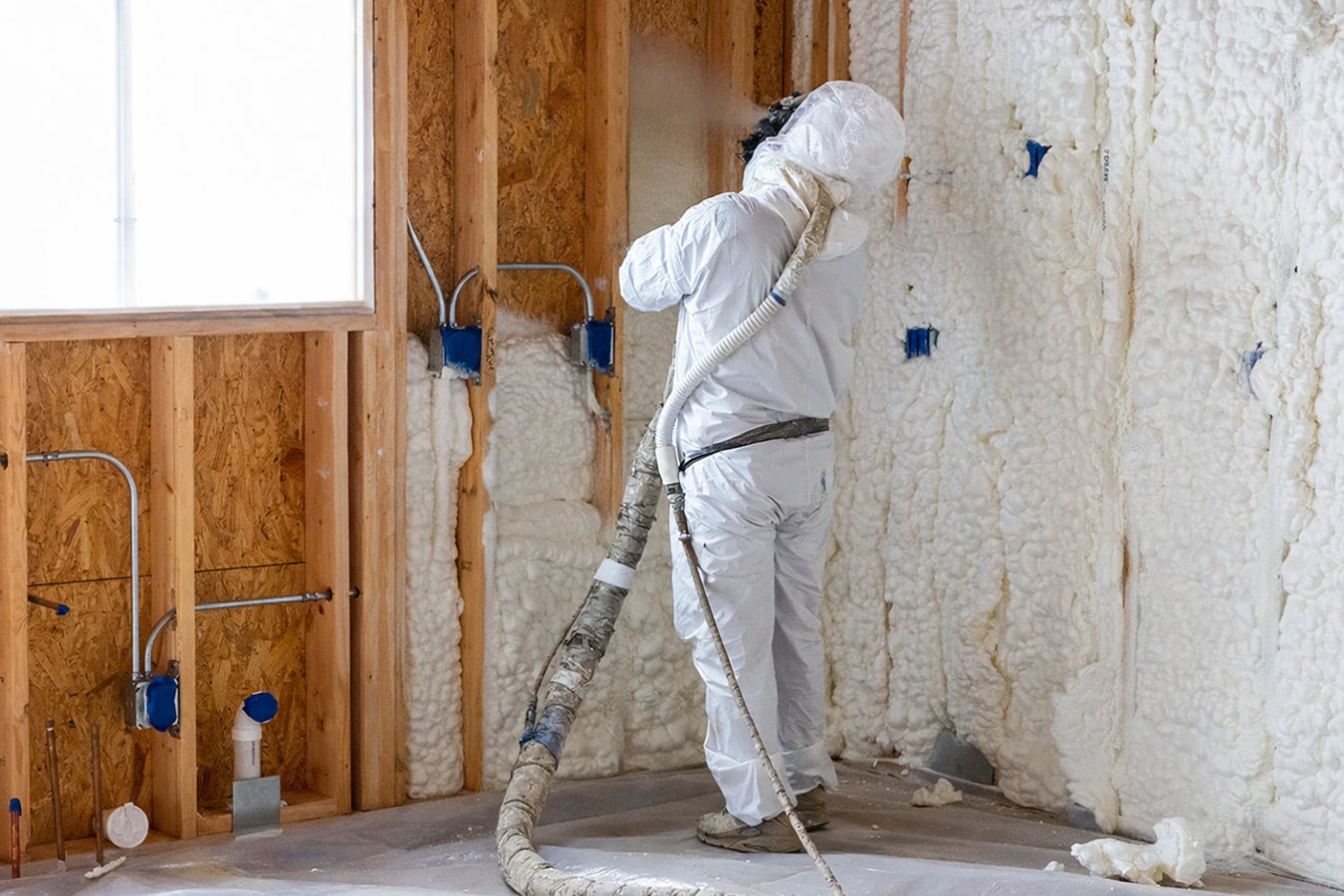
Spray foam insulation in Burley, ID seals air leaks and insulates in one step - most attic or crawl space jobs are complete within a single day. Two liquid chemicals are mixed on-site and sprayed into walls, crawl spaces, attics, or rim joists. Within seconds the mixture expands and hardens, filling gaps and cracks that traditional batts of fiberglass simply cannot reach.
For Burley homeowners dealing with cold floors, uneven room temperatures, or heating bills that spike every November, the cause is almost always air moving through the building envelope rather than through the insulation itself. If you have already had your furnace serviced and the problem persists, the building envelope is the logical next step. Many homeowners who start with spray foam later pair it with attic insulation to address every major heat loss path in one project.
Burley sits in the high desert of south-central Idaho, where winter temperatures regularly drop below 20 degrees F and heating season runs from October through March. That thermal stress puts real pressure on a home's building envelope, and spray foam's combination of air sealing and insulation makes it especially well-suited to this climate. According to the U.S. Department of Energy, air sealing and insulation together can reduce heating and cooling costs by 15 percent or more in a typical home.
If your gas or electric bill climbs sharply from November through February without any change in your habits, your home is losing heat faster than it should. In Burley's cold winters, a poorly insulated crawl space or attic can account for a large portion of that loss. If your furnace has already been serviced and bills are still high, insulation is the next logical place to look.
Walk through your home on a cold morning in bare feet. If the floors feel noticeably cold, especially over a crawl space or unheated garage, or if you feel a draft near the base of exterior walls, cold air is getting in from below or through the wall cavity. This is common in older Burley homes where crawl space insulation was never installed or has deteriorated over time.
If one or two rooms are always colder in winter or hotter in summer than the rest of the house, the problem is often air leakage rather than your heating system. Spray foam addresses the gaps and bypasses that cause uneven temperatures, especially in attics, bonus rooms, and spaces above garages.
Burley's agricultural setting means the air outside carries real amounts of dust and fine particles, especially during spring and fall planting and harvest seasons. If you find yourself dusting constantly or notice a fine layer of grit near windows and exterior walls, your home may be pulling outside air through gaps in the structure. Sealing those gaps with spray foam can make a noticeable difference in indoor air quality.
Burley Insulation installs both open-cell and closed-cell foam insulation , and the right choice depends on where in your home the work is being done and what your specific goals are. Closed-cell foam is denser, more rigid, and acts as a moisture barrier in addition to insulating - making it the preferred choice for crawl spaces, rim joists, and exterior walls where both air sealing and moisture control matter. Open-cell foam is softer and more flexible, making it well-suited for attic floors and interior walls where sound dampening is also a benefit.
Both types expand on contact and fill irregular framing, gaps around pipes and wires, and areas that pre-cut batts simply cannot conform to. This is especially valuable in older Burley homes built in the mid-20th century, where framing dimensions are not always consistent and decades of settling have created gaps that no standard batt will fill. We assess each project individually and recommend the foam type and thickness that match your climate zone, your home's construction, and your goals.
Best for interior walls and attic floors where flexibility and sound dampening are priorities alongside air sealing.
Best for crawl spaces, rim joists, and exterior walls where both moisture control and high R-value per inch are needed.
Converts a vented attic to a conditioned or semi-conditioned space, eliminating duct losses in the unconditioned attic.
Seals the perimeter walls and rim joists of a crawl space, stopping cold air infiltration from below the living space.
Burley's high desert climate creates two distinct insulation challenges: winters that push heating systems hard, and summers where attic temperatures can become extreme. January lows regularly drop into the teens, and the gap between daytime and nighttime temperatures means homes are constantly being stressed by thermal movement. Spray foam's expansion into every gap and corner - including irregular spaces that fiberglass batts cannot reach - makes it particularly well matched to the older wood-frame construction that dominates Burley's residential neighborhoods.
Agricultural dust is another factor that homeowners near Rupert and Paul often mention. During planting and harvest seasons, the air in the Magic Valley carries significant particulate matter, and homes with leaky envelopes pull that dust inside through gaps in the structure. Spray foam's air-sealing effect cuts off those pathways, which many homeowners notice as a real improvement in indoor air quality, not just comfort and energy bills.
We respond within 1 business day. We will ask a few basic questions - what areas you want insulated, whether it's a new project or a replacement, and roughly when you'd like the work done. Scheduling can fill up in fall, so reaching out in late summer gives you more flexibility.
A member of our team visits your home and looks at the areas to be insulated - attic, crawl space, walls, rim joists. We measure square footage and check for any existing moisture issues or structural concerns that need to be addressed before foam goes in. You receive a written estimate that breaks down what's being done and what it costs.
The crew masks off surfaces that should not be coated - electrical panels, vents, windows, finished surfaces near the work area - then sprays the foam in sections. The foam expands and hardens within seconds. Most single-area jobs are complete within a few hours. Plan to be out of the home for at least 24 hours after the work is finished.
We give you a specific re-entry time before the job starts. When you return, the foam will be fully hardened and any smell should be minimal. Walk through the treated areas with us if you'd like - a confident crew welcomes your inspection before we pack up.
We respond within 1 business day. Getting an estimate is free and there is no obligation. After you submit the form, someone from our office will call you to schedule a free on-site assessment at a time that works for you.
(208) 679-8672We live and work in Cassia County, which means we understand the climate, the housing stock, and what works here. We are not a regional franchise adding Burley to a map - this is our market.
We do not quote jobs over the phone without seeing the space. Every project starts with a free on-site assessment and a written estimate that breaks down materials and labor, so there are no surprises on the final invoice.
We document what we install and give you a written summary when the job is done. Ask us for that record before work begins - we are happy to provide it.
Proper spray foam installation requires trained applicators following manufacturer guidelines for temperature, humidity, and thickness. We follow those specifications on every job, which protects your warranty and ensures the foam performs as designed. The Spray Polyurethane Foam Alliance at sprayfoam.org publishes independent quality standards you can reference.
A quality spray foam job is one you should not have to think about again. Our goal on every project is to do the work right the first time - proper prep, correct foam type, adequate thickness - so the insulation keeps performing for the life of your home without callbacks or patches.
Pair spray foam air sealing in the attic with bulk insulation to hit the R-value your climate zone requires.
Learn MoreThe denser option for exterior walls, rim joists, and crawl spaces where moisture control is as important as thermal resistance.
Learn MoreBurley winters are long - the sooner your home is sealed, the sooner you stop paying for heat that escapes before it reaches your living space.